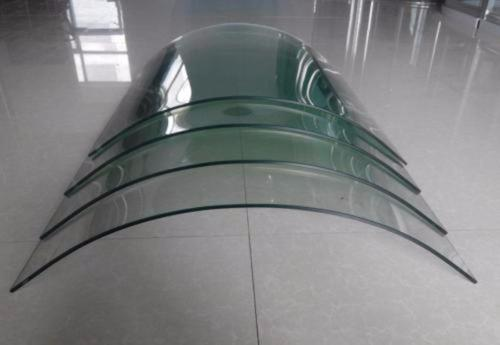
On the line, the tempering or bending furnace doesn’t slow down for glass that isn’t ready. When the heating section is off its game, you know it instantly: edge compression drops, a wave shows up in the optical zone, and thermal stress cracks start popping. None of that is random. It’s the direct result of uneven heat.
What actually matters, technically
We built our IR lamp for glass work around controlled radiation and repeatable temperature distribution. Short-wave quartz halogen elements dump energy straight into the glass with low thermal inertia, so the zone can snap back to setpoint fast when thickness or spacing changes. The emitters are engineered for stable spectral output and consistent emissivity across the hot face, so absorbed energy stays predictable sheet after sheet. Reflectors and modular lamp arrays are arranged to even out the thermal field. That cuts hot bands and cold edges that drive differential expansion. In practice, you get less thermal stress, fewer rejects, and curvature in bent glass that actually holds true.
Why this works where the work happens
Uniform heating is the difference between a line that runs and one that fights you every shift. In tempering, even heating before quenching lowers breakage risk and cleans up optical quality. In bending, a balanced heat profile keeps sag consistent across the panel, so you hit the target radius without twist or waviness. The lamp also climbs faster, which shortens cycle time and keeps throughput up. Energy use drops because more heat goes into the glass, not into heating air and fixtures. For lamination and coating drying, uniform heat prevents trapped moisture and solvent pockets, which cuts down on delamination risk and pinholes.
The details you can’t gloss over
This IR lamp fits standard mounting and electrical interfaces, but it has to be matched to the machine’s control strategy. You’ll get tighter uniformity when the lamp-to-glass gap, power density, and dwell time are set for the specific glass thickness and coating system. The surface runs hot, so shielding and interlocks are not optional. Plan on routine checks of terminals, reflectors, and lamp alignment—small mis-positioning can drift the heat profile before you even notice. On a 24/7 line, keep a spare lamp on hand. It turns a long unplanned stop into a quick swap.