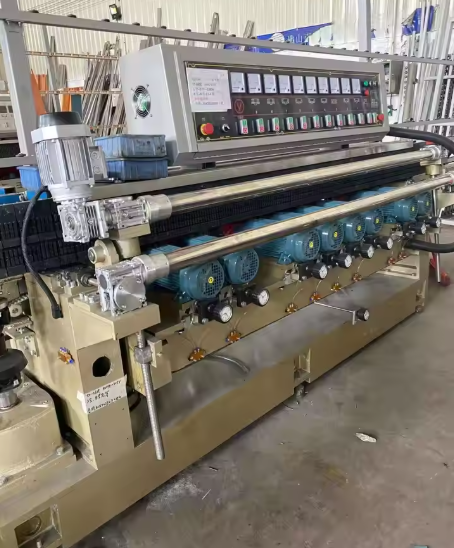
On the glass line, heat is more than a temperature reading. It’s timing, uniformity, and repeatability—every shift, every batch. Get the heat profile wrong during bending, and you’ll see optical distortion staring back at you. Ramp too slow in tempering, and throughput drops while roller marks start to show. In lamination, uneven curing shows up as bubbles and weak edges. Overheat during coating drying, and you’ll shift color and build stress in the substrate. The wholesale glass heating lamp is built to keep those risks out of the process and keep the line moving. What matters under the hood We build these lamps around short-wave infrared (SWIR) elements in a quartz envelope. Fast response, high power density, and not much convective heat bleeding into the surroundings. The spectral output is tuned to match the absorption of glass and functional layers, so the energy goes where it needs to—into the glass—instead of wasting heat on fixtures and air. You can spec power and voltage to fit your machine footprint. Compact form factors make retrofits practical, and standard mounting interfaces get you installed quickly. Output stays stable through controlled duty cycles, so the thermal profile stays consistent shift after shift. Why it plays well in real processes In hot bending, the lamp gives you rapid, localized heating. That cuts cycle time and tightens shape repeatability, especially on those complex curves. For tempering, it delivers the sharp, controlled preheat that raises the glass surface temperature fast, supporting higher throughput without overshoot. In EVA/SGP/PVB lamination, uniform curing across the ply stack improves edge bond strength and reduces rework from haze or delamination. On coating drying, the fast response and tight control help keep film quality consistent, with less variation across the sheet. The payoff is fewer scrap sheets, lower energy per part, and scheduling you can actually count on. What you need to keep straight These are industrial-duty lamps, but the heat density means clearance and alignment matter. Keep reflectors clean, verify mounting tolerances, and make sure the power supply matches the lamp curve. For the best results, match lamp output to the emissivity and thickness of the glass you’re running. Thicker substrates—or coated ones—often need adjusted power density to avoid thermal shock. And plan for routine inspection; quartz and terminal integrity directly affect uptime and safety.