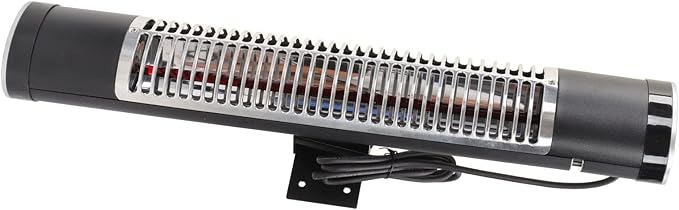
The Real Reason Our Bathroom Heaters Don’t Fail
Let’s get straight to it. We build our infrared heaters specifically for the bathroom for one simple reason: standard heaters just can’t cut it in there. It’s a brutal environment. You’ve got moisture everywhere, and that’s a recipe for disaster. So to make something that’s truly reliable, you have to build it from the ground up to keep the water out and the electricity safely contained. Here’s how we do it. The heart of the unit is a quartz tube, sealed up tight under a vacuum. This creates a physical wall between the heating element inside and the wet chaos outside. That’s your first, and most important, line of defense.
The Materials Make All the Difference
We don’t just pick quartz for the heat. We use a robust quartz halogen element because the quartz glass itself has the dielectric strength to handle high voltage while shrugging off thermal shock. Inside, the halogen gas protects the filament, so the heater can take a serious beating over thousands of cycles without breaking a sweat. And when it comes to the connection, we spec out the R7s connector for a reason. It gives you a secure, double-insulated connection that prevents arcing. So even when the air is soaking wet, your electrical connection stays perfectly dry and stable.
What This Means for You on the Job
For you, the engineer, this whole setup solves the headache of installing in a damp space. Forget about short circuits and tripped breakers. Our design is a straightforward, drop-in replacement that’s built to handle the moisture. The mirror surface is even treated to resist condensation, and all the internal electronics are fully sealed away. But here’s the catch—the one thing you have to plan for. We pack 2500W of power into this thing. It throws off intense, immediate heat. That kind of power density needs proper airflow around the mounting enclosure. If you stick it in a sealed cabinet with no ventilation, the internal components will run hot. So plan your cooling accordingly. This isn’t a simple plug-and-play gadget. It’s a rugged tool built for a harsh environment. It delivers the heat, no question. You just have to be smart about managing the heat it generates, too.