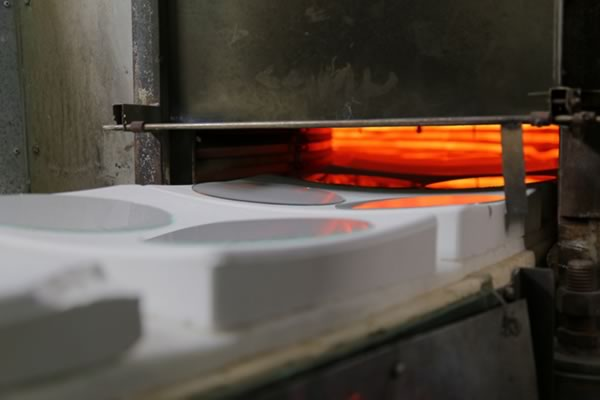
Building infrared heating units longer than 2 meters for glass tunnel kilns is a bit of a headache. If you try to use a standard, off-the-shelf lamp, it just won’t work. They aren’t built for it—they’ll sag under their own weight or suffer from voltage drops that kill the heat. To fix this, we don’t just “buy a bigger lamp.” We actually customize the filament geometry and thicken the quartz tube walls. It’s the only way to make sure the unit stays structurally sound when things get scorching hot. The struggle with power Here’s the thing: when you’re dealing with a unit this long, you can’t just crank up the wattage and call it a day. If you do, you’ll end up with “cold spots” right in the middle of your tunnel. We handle this by carefully balancing the voltage and wattage across the whole array. It keeps the heat density even. You’ve also got to keep a close eye on your power supply. If the voltage starts jumping around, the ends of those long tubes will burn out way faster than the center. Dealing with the physical stuff We use heavy-wall quartz because, at operating temperatures, a thin tube will bow. It’s basic physics. And since these are for continuous layouts, the connectors have to be spot on. We use reinforced end-caps to soak up the thermal expansion. When a 2-meter tube hits its peak temperature, it moves. A lot. Those caps keep everything from snapping. The trade-off The big win here is the footprint. Because you have a continuous “heat curtain,” you don’t need a dozen different lamp housings taking up space. It makes the whole machine sleeker. But there is a catch. Replacing a tube is a bigger job. If a 2.5-meter tube goes, you’re swapping out a massive component rather than a small, easy lamp. Because of that, you really need to make sure your kiln’s access panels are wide enough. You don’t want to be forcing a giant glass tube into a tight space and risking a crack. Oh, and don’t skimp on the mounting brackets. A little bit of vibration can lead to a lot of broken glass.