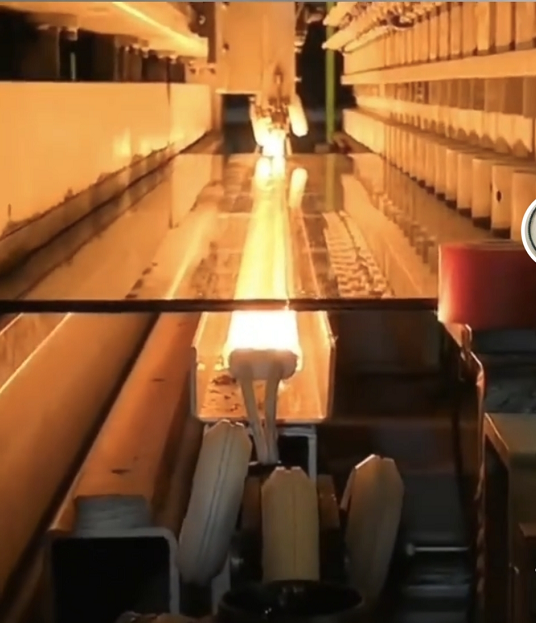
On the glass line, the bottle comes off the forming machine and into the lehr. That’s where the thermal history locks in final quality. If the heating profile starts to drift, annealing gets uneven, residual stress becomes unpredictable, and scrap climbs. Internal treatment heaters for bottles are there to stop that drift right at the source. What actually matters under the hood We build these heaters to live inside the lehr, where the work sees a controlled radiant field. Quartz elements give you fast response and clean output, with tight control over emissivity and hot-zone uniformity. The payoff is a stable thermal envelope that keeps the glass in the annealing range—no hot spots, no cold zones. Temperature repeatability is typically ±2°C across the belt width, so the same setpoint delivers the same stress relief shift after shift. Power density is matched to line speed and bottle geometry, so you don’t overshoot the soak or end up chasing temperature after a changeover. Why it holds up in daily production In real runs, these heaters keep annealing predictable and stress elimination consistent, which cuts breakage downstream. Startup ramps to setpoint faster, stabilization after changeovers is shorter, and temperature-induced defects drop off. Energy use falls because the heaters come up quickly and hold steady—no wasted cycles of overheating and cooling back down. And the footprint is straightforward: the design fits existing lehr layouts, so you can swap in aging modules without tearing the whole line apart. What to watch on the floor These heaters are sensitive to airflow and clearance. Keep the inlet and outlet paths clear, and make sure voltage and connector specs match the control cabinet. In high-humidity plants, add condensation protection in the terminal housing to prevent tracking. Plan your spares around quartz element life, and keep a spare module on hand so downtime doesn’t stretch out when something goes down.